
Fast Claims, Loyal Customers: The CX Economics

Why faster, clearer claims experiences drive retention and growth.
Why claims speed and clarity drive retention
Retention is won—or lost—during the claims experience. When policyholders wait for updates, repeat information, or struggle to understand decisions, they churn, switch carriers, or tell their broker to move them. Conversely, when claims are fast, transparent, and fair, customers stay.
Independent research underscores the stakes: in 2024, J.D. Power reported property claims satisfaction at a seven‑year low—driven by longer repair times and friction—while digital claims satisfaction rose, signaling that better journeys can reverse the trend. See the highlights here: J.D. Power 2024 Property Claims Study and broader context in home insurance: J.D. Power Home Insurance Study.
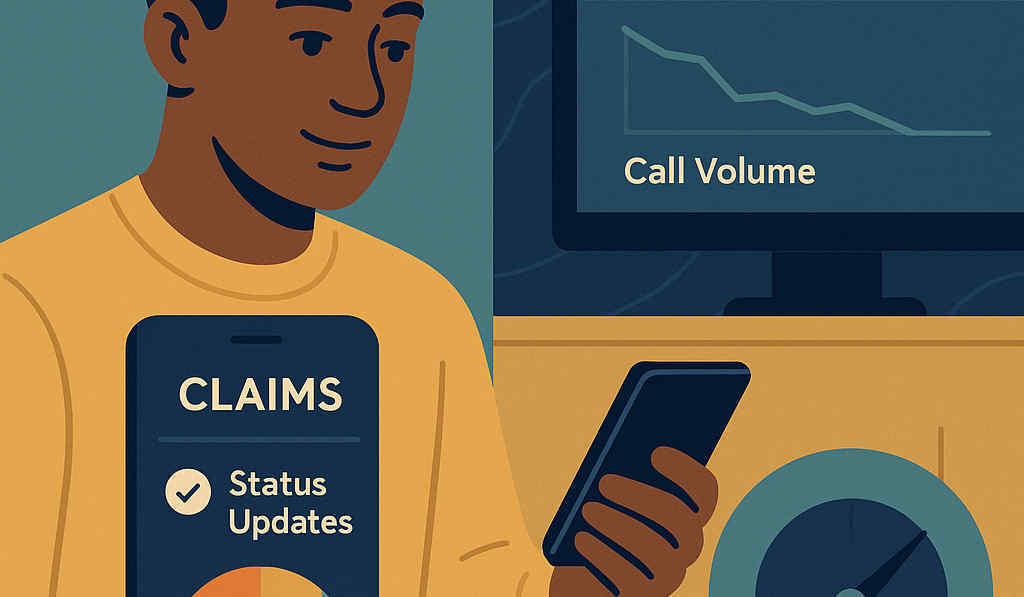
The economics are direct. Faster cycle times reduce rental days, storage fees, and adjuster touches; proactive communication deflects costly inbound calls; and clear decisions lower disputes and rework. These operational gains translate to higher NPS and renewal rates, especially in personal lines where switching is easy and in specialty lines where broker advocacy matters.
For auto, recent studies show repair cycle times falling from 23.9 to 18.9 days later in 2024, with satisfaction improving accordingly; see the trend in the auto claims study: J.D. Power Auto Claims Study. This post lays out a practical blueprint to connect claims speed and clarity to retention: design journeys that reduce uncertainty, embed proactive updates, and measure the results in renewal‑linked KPIs. The objective is not just happier customers—it’s durable growth through loyalty.
Designing a claims journey customers actually trust
Design a journey that minimizes uncertainty. From FNOL onward, set expectations clearly: what’s needed, who’s handling the claim, and when the next update will arrive. Replace paper and email scavenger hunts with guided mobile capture for photos, invoices, and reports. Use contextual validation (policy number, location, time) to reduce back‑and‑forth.
For complex losses, provide a single, named contact and a timeline with milestones (inspection scheduled, estimate approved, payment initiated). Proactive notifications should preempt the top inbound calls—status, documents required, payment ETA—through the customer’s preferred channel. Transparent decisions build trust. When you auto‑triage or request additional documentation, explain why in plain language and provide an appeal path.
Store and surface the evidence used in decisions (photos, reports, model outputs) so adjusters can resolve disputes quickly. For digital claims, the bar is rising; J.D. Power’s 2024 U.S. Claims Digital Experience Study reported overall satisfaction at 871/1,000, up 17 points YoY, underscoring the value of clear and intuitive digital journeys. See the study: J.D. Power Digital Claims Study.
Design for surge. During catastrophes, temporary policy adjustments (e.g., relaxing noncritical validations), surge staffing, and prioritized communication cadences can offset repair delays that drive dissatisfaction. Instrument drop‑offs and repeat contacts to identify friction points. Segment by line of business: auto vs. property vs. specialty have distinct expectations and partner networks.
Finally, close the loop: after resolution, ask for feedback, highlight improvements from prior events, and offer tailored retention CTAs (renewal incentives, broker consultations) that acknowledge the customer’s experience.
Building the retention engine: metrics, playbooks, and CTAs
Turn principles into a retention engine with operating metrics and playbooks that marketing, claims, and brokers share.
Track claim cycle time by segment, first‑touch resolution rate, proactive notification coverage, and deflection of “where’s my claim?” calls.
Tie these to CX metrics like NPS/CSAT and renewal rate deltas for customers who used digital claims vs. those who didn’t. J.D. Power’s 2024 U.S. Property Claims
Satisfaction Study found satisfaction at a seven‑year low due to repair delays and friction—amplifying the upside for carriers that get the journey right. See the press release and data highlights: J.D. Power Property Claims Study and the full PDF: J.D. Power 2024 PDF.
Build playbooks around common scenarios: low‑severity auto (straight‑through), moderate property (scheduled inspection with partner updates), and high‑complexity specialty (human‑led with expert networks).
Equip brokers with co‑branded status portals and message templates to reduce confusion.
From a governance standpoint, maintain an immutable event log and provide transparency statements on how AI assists in triage and communications; regulators expect explainability and auditability as AI use grows.
For CMOs and growth leaders, connect claims CX to revenue. Attribute renewals and cross‑sell upsides to faster cycle times and clearer communication.
Publish “CX saves” stories: dollars retained due to proactive updates and fair resolutions.
With modern claims platforms, the same architecture that speeds claims also powers trust messaging at scale—turning happy policyholders into long‑term customers and advocates.